
Cubism - The Evolution of Form and Space in Modern Art
Cubism emerged from the bold experiments of Cézanne, Picasso, and Braque, redefining how we see form, depth, and space. This revolutionary art movement transformed modern painting through geometry and abstraction.
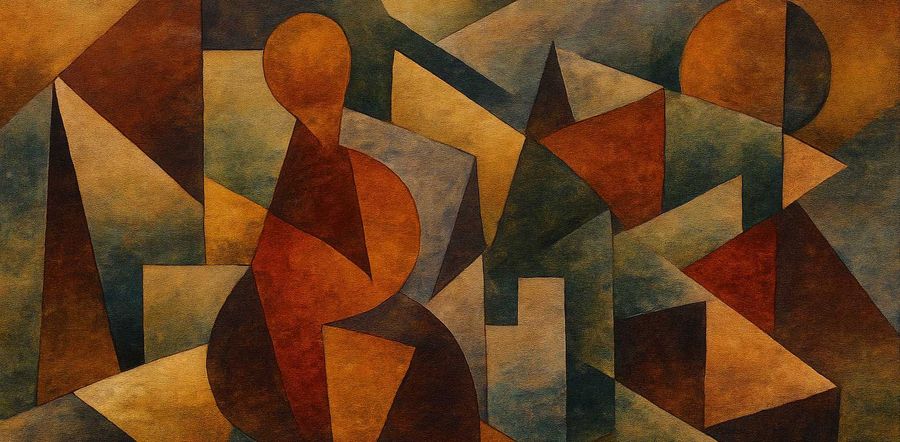
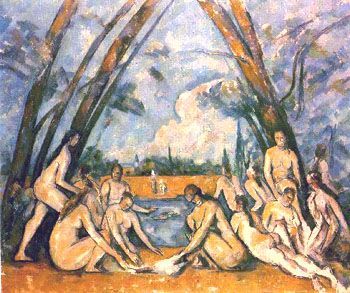
The following elements contributed decisively to the formation of Cubism: Cezanne's first great Exhibition of 1907; the Rousseau "phenomenon", but also the study of black art.
Paul Cezanne (1839-1906) is the artist who completes the enormous task of purifying, simplifying, explaining and verifying artistic forms.
Cubism thus begins, with the care for a rigorous composition of the paintings, the search for important and serious analogies, the adaptation of natural models – landscapes, objects, figures – to a pure criterion of form, with a rigorous geometry; the systematic elimination of all accessories.
In Pablo Picasso and Georges Braque, one can already observe the lack of distinction between image and background, the elimination of the succession of planes in an illusory depth, the decomposition of objects and space according to a single structural criterion, the conception of a structure as a skeleton but also as a formal aggregation process, the superposition and joining of images from different points, with the intention of presenting the objects in relation to their structure and the structure of the surrounding space, the merging of light with the chromatic planes resulting from the decomposition and integration of objects in space, the search for new technical means for the plastic realization of this object-space.
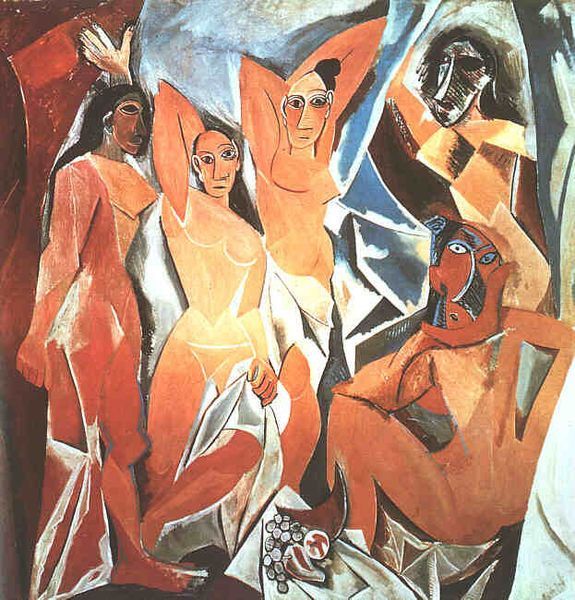
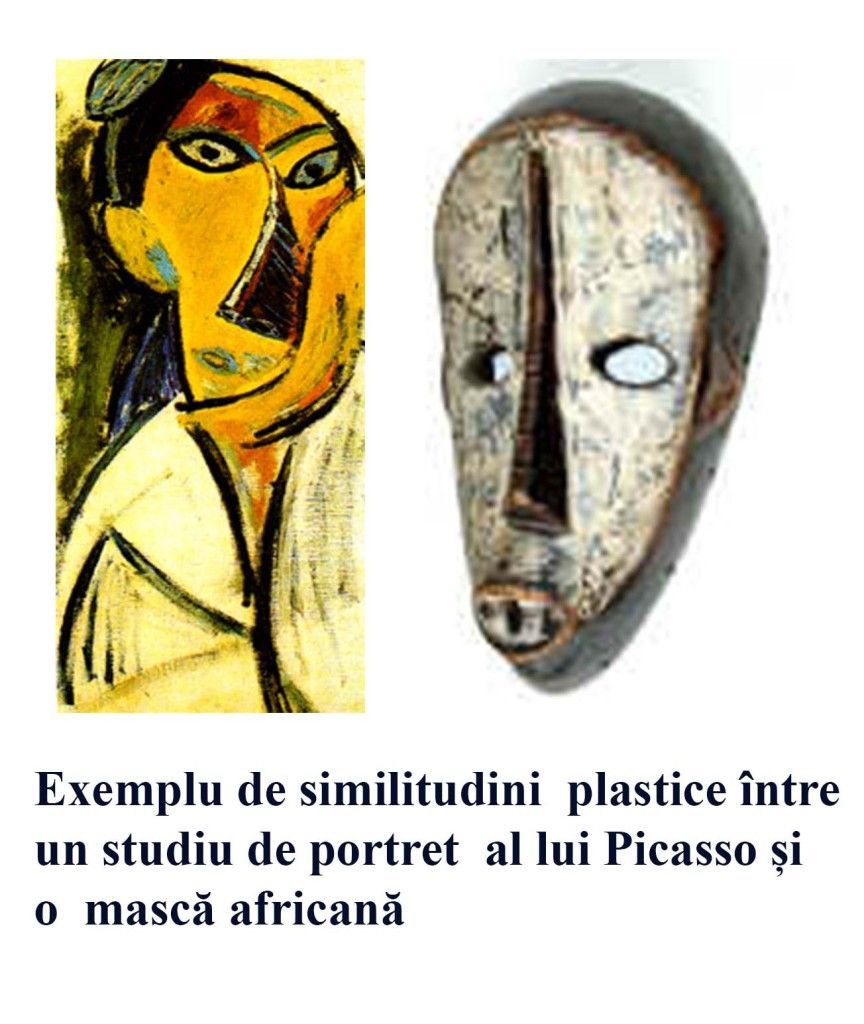
The Cubists were especially influenced by black masks and fetishes. The construction of a painting, they decided to be more precise, more rigorous, drawn more defined, more striking, everything to create a firm structure, exactly like in black sculptures. The plastic modes of African art were jerky, cold, simplified to the maximum: wide planes, smooth volumes, summary deformations.
The surface of the painting became not a place where it is projected, but a plastic plane in which the representation of reality is organized.
Chronological development of the stages of Cubism:
The first period, also called the Cézannian Period, does not have a very clear development in time but is under the strong influence of Cézanne's famous recommendation to "render nature through the cylinder, the sphere and the cone";
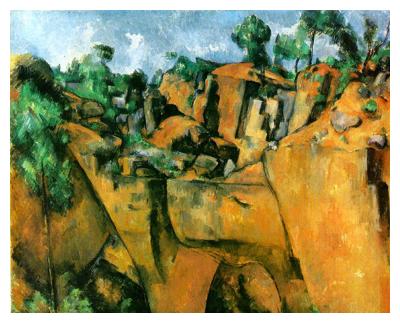
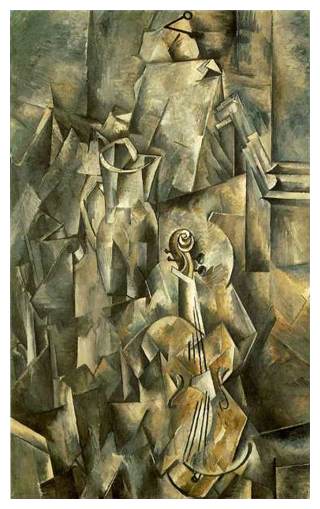
The second period, also called Analytical Cubism, begins around 1911, including, in addition to the two initiators, Juan Gris (1887-1927), Fernand Leger (1881-1955). During this period, the artists' attempts focus on breaking down the represented object into a multitude of small, geometrized surfaces;
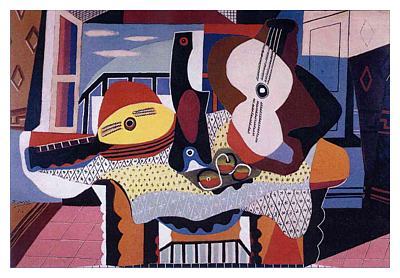
Between 1912 and 1920, the transformations in the artists' works lead to what is called the synthetic phase, where they focused less on the way of seeing things and more on the process of structuring and composition; The compositions of the synthetic period are totally freed from what still remained of the illusion of the deep plane in the analytical works – what is presented will henceforth appear exclusively in flat forms. The objects are unified again, but they are still not forms copied from nature, but simplified signs, which were supposed to reveal their most essential features, the synthesis of the objects presented.
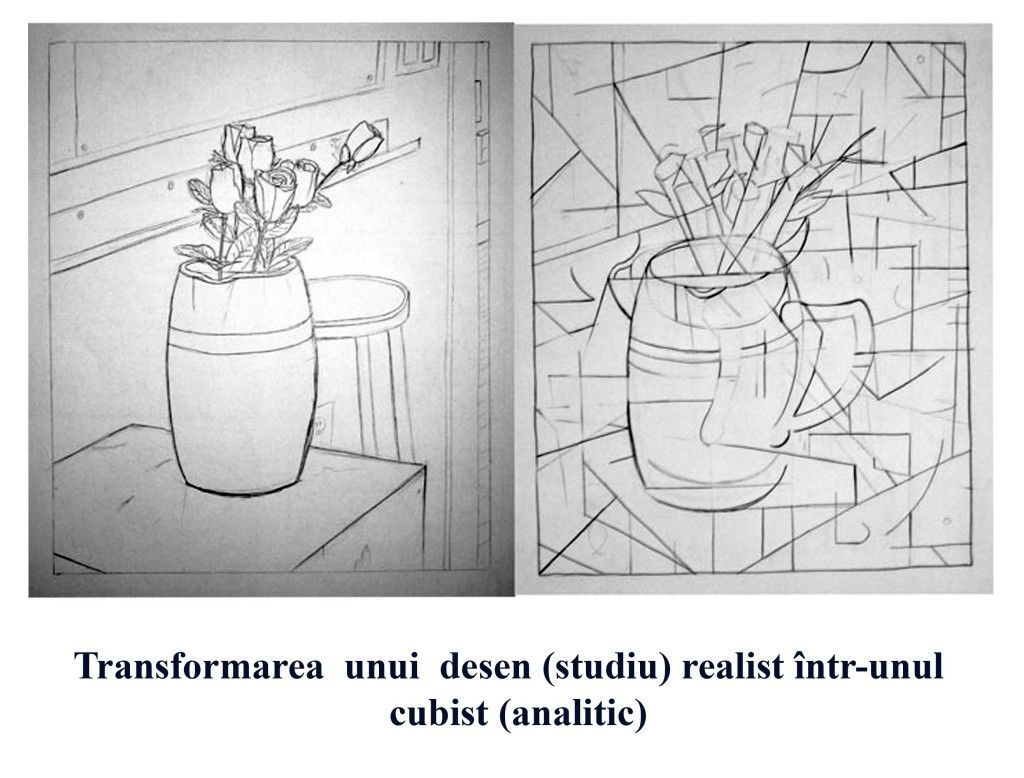
Finally, here is a simple example of how a simple sketch of a flower pot can be transformed into a cubist version.
Tags
- cubism
- picasso
- braque
- modern art
- art history