
New Technologies in Art - From Photography to Digital Creation
Discover how technological innovations like photography, video art, and digital media have transformed the way artists create and express themselves - from the early daguerreotype to the digital revolutions of today.
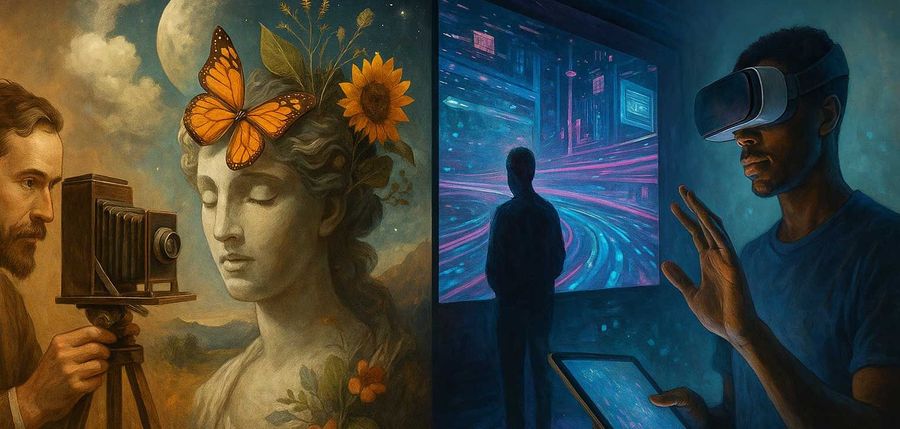
One of the first technologies that represented a major challenge to painting was photography, which from the point of view of realism gave rise to numerous controversies regarding its artistic merits, due to its status as a technology. However, photography was not the first multiplier, but it meant the introduction of an automatism in the manual work of illustration: " Light replaces the artist's hand ." Engraving and lithography were techniques, but the daguerreotype was already a technology. From here a long period of transition would begin, from the fine arts to the visual industries. For a long time after the invention of photography, the painter only pursued a career, but the photographer pursued a profession. What was repeatable was despised, but this is how "democratizations" always begin. Over time, their thematic area diversified, starting with portraits, landscapes, then aerial perspectives, social scenes, scenes from different tribes and, as technology diversified, so did the themes.
Art photography multiplies the unique work, but the successful snapshot of the photojournalist is itself unique. The camera manages to reproduce the charm of the event through the "sensational document", it captures the moment that we will not see again, the inaccessible face of the star or the indelible, irrefutable gesture of the athlete, the politician or any other person. We cannot talk about photography in general, but only about a specific photograph, which is the double of a scene, a landscape, a character at a given moment, in its singularity and contingency.
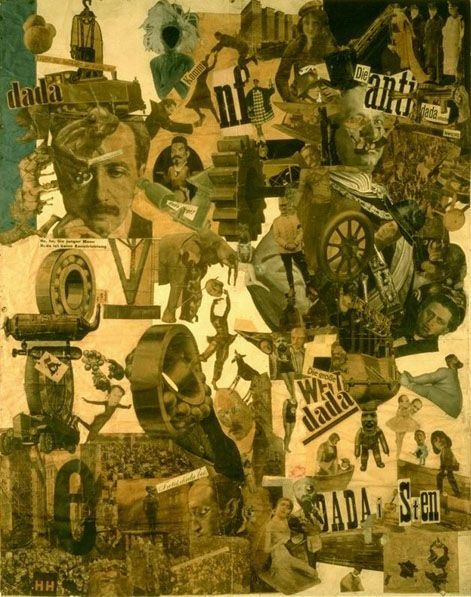
Starting in the 60s and 70s, artists began to experiment with combining photography with other graphic techniques, photo collage , and even painting.
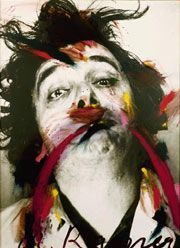
A photographer and painter who conducted various investigations into body language and also made various interventions on his own physiognomy, using unique techniques, was Arnulf Rainer (b. 1929). In 1969, he exhibited a series of portraits on which he intervened either in color or in black and white, deforming the physiognomies, in the exhibition Face Farces . Through these interventions , Rainer transformed faces into masks or so-called farces .
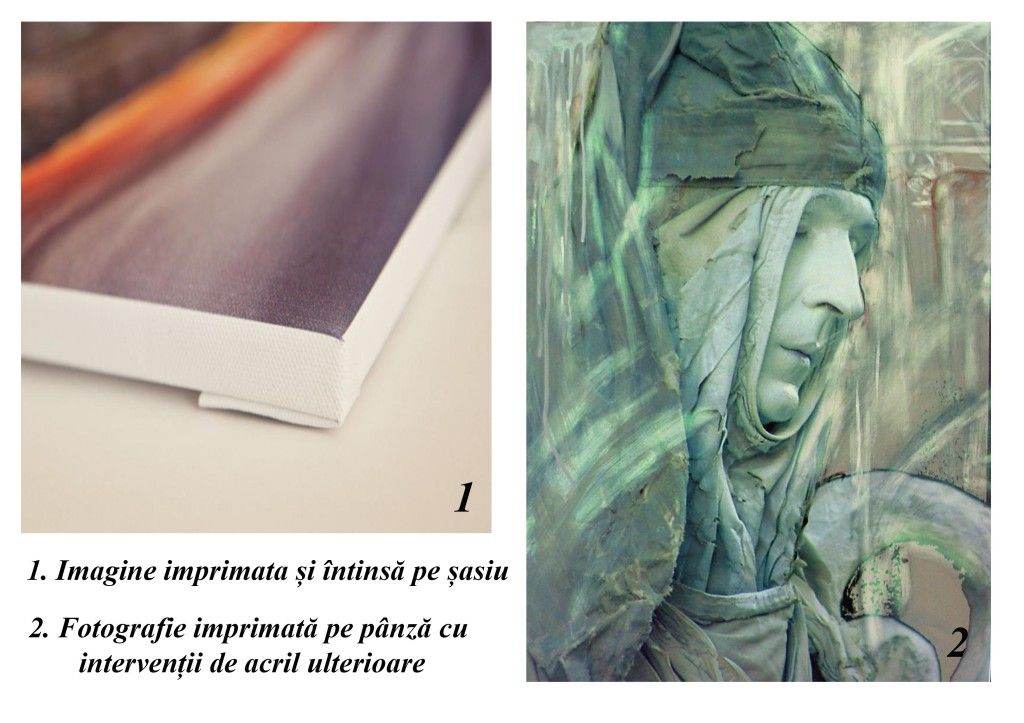
Today, we are reaching the full processing (with the help of computer programs) of a digital photograph to imitate a painting, printed on canvas then stretched on a frame like classical painting, called neo-painting by some artists .
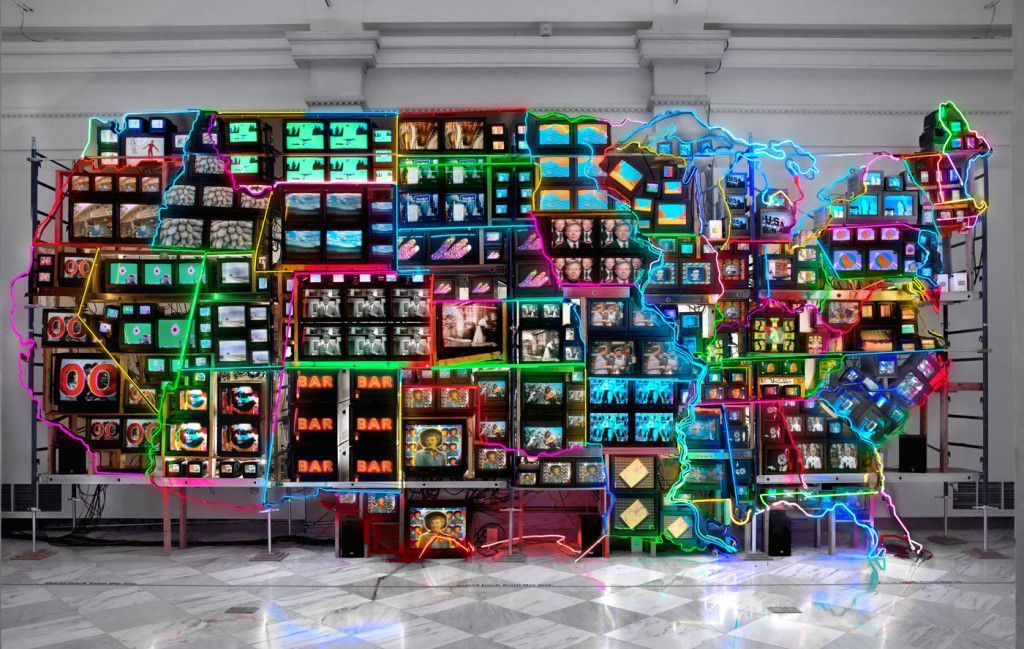
The technique of video art took time to be recognized as such within contemporary art. It brought with it more movement, fluidity, but also a certain ease of handling. Today, video art being associated with digital, can be easily handled, not only by professionals, but by any amateur who owns a personal computer, thus being able to "play" with different images. And within this art, it began with "electronic collages", the image being subjected to various transformations, conjurations, reappearances, using different decorations, backgrounds, frames, volleys, or templates of all kinds. The characters can be cut out, they can lose their heads, they are either riding on the moon or levitating in space.
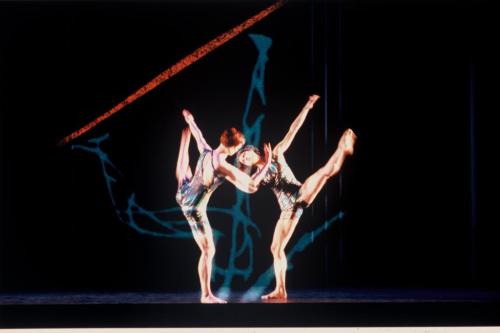
Because it records and "instantly" reproduces the body's gestures, the video camera has very quickly become an indispensable correlative of the choreographer's work . It allows the recording and broadcasting of exercises and performances. It promotes awareness and correction of sequences. Coupled with a computer, it allows for extremely fine regulation and control of movement. Video therefore leads to a renewal of creation and novel experiments.
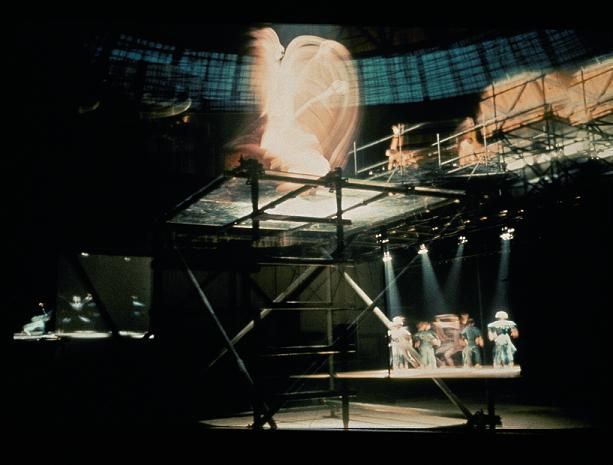
Theater has always made use of machinery. Antiquity and the Baroque century excelled in developing devices that allowed miracles to be created on stage. Contemporary technologies have done nothing more than prolong an ancient illusionist tradition. For the “ video-ballet-show” Gamme de 7, presented in 1964, Jacques Polieri resorted to a video projection on a giant screen, for the first time in the history of theater, which is based on the management and mechanization of various combinations that would allow the presentation of a unique show, but for which each spectator would have a different view.
Today, the stage-auditorium relationship is completely shaken, the space becomes multi-purpose and lends itself to all kinds of manipulations.
The computer became a tool for managing the visual. With its appearance, " the victory of language over things and of the brain over the eye occurs. The flesh of the world is transformed into a mathematical being of some kind: this would be the utopia of the "new images". ” [1] It reached 2D (in two dimensions) or 3D (three dimensions), in animated or static ways. Finally, it also reached simulations of various academic forms and motifs, up to the simulation of man who appeared as a persistent phantasm. The representation of movement constituted a considerable stake, which was achieved. It reached the analysis and decomposition of the movements of the characters, in order to reconstruct them with all possible finesse. Between 1995 and 2005, a multitude of supports appeared in art, but also numerous combinations of them (mix-media).
Tags
- new technologies in art
- digital art
- multimedia art
- computer art
- art and innovation