
The Mask in Universal Culture - Symbol, Ritual, and Art Across Civilizations
From African tribes to Venetian carnivals, masks reveal humanity’s spiritual and artistic essence. Explore how this ancient symbol connects ritual, theatre, and identity across the world’s cultures.
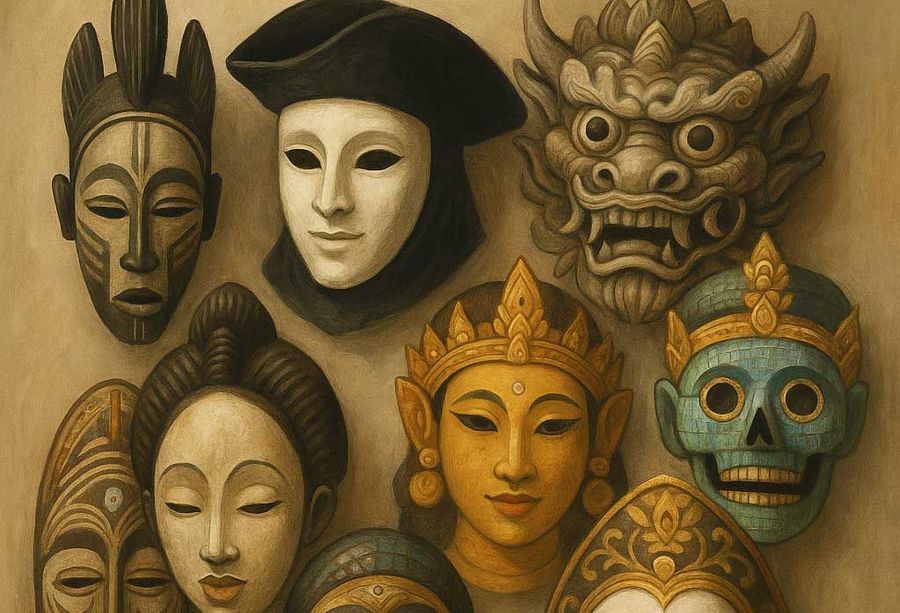

Masks are a way of manifesting the universal self. If we speak, from a philosophical point of view, then we can say that every man wears a mask, in certain situations. "What else can our civilized world be likened to, but a great masquerade?" says Schopenhauer.
Masks are a familiar and vivid element in many traditional folk contests, ceremonies, rituals and festivals. They are often of ancient origin. The mask is normally part of a costume that adorns the entire body and embodies an important tradition in the religion and/or social life of the community or of a particular group within the community. The mask was used in shamanic rituals. Through it, the shaman mediated a connection with the spirit world; the mask covers the face of the dead, protects the mortal from the divine gaze or is used in various rituals of pagan origin, such as in the Călușarilor dance, specifically Romanian.
There are several types of masks: the theater mask, the carnival mask and the funeral mask. Theater masks are an adaptation of the actor to the role. He identifies with the divine manifestation he embodies. " For the mask, especially in its "unreal" and animal aspects, is the "Divine Face" and especially the face of the Sun, through which the rays of spiritual light pass " ( Chevalier, Jean , Dictionary of Symbols Ed. Polirom, Iaşi, 2009, p. 229). The function of the mask can be magical or religious; they can appear in rites of passage or as a make-up for a form of theater.
In the case of carnival masks , demonic tendencies are externalized, as in Balinese theater, where two aspects of it confront each other, it being believed that the lower satanic part is liberated through the mask, thus the carnival mask does not hide but, on the contrary, reveals the inner tendencies that must be banished.
The funeral mask , on the other hand, is considered to be the one that reintegrates the soul of the deceased.
I will now present the most significant cultures that used masks in their rituals.
The variety and beauty of masks in the Melanesian archipelago (Oceania) are almost as developed as in Africa. It is a culture in which ancestor worship is dominant, so that all religious ceremonies are dedicated to the ancestors. As in a culture specific to scattered islands (such as the peninsulas that form the Melanesian archipelago in Oceania) the mask has developed in a diversified way.
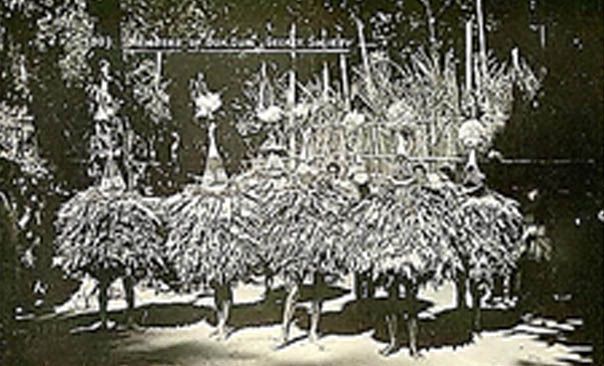
In Papua New Guinea, there are totem poles with masks six meters high. They are believed to protect life from the negative influence of alcoholic beverages. And the huge conical masks, Duk-Duk , made of sugarcane and leaves, the so-called turban masks of New Guinea, are used in ceremonies for the purpose of intimidation, being worn only by members of a secret society.
On the Pacific Northwest coast, there were various indigenous groups who worked wood with great skill. Their masks were often considered works of art in the field of sculpture. They sometimes had movable jaws, or one mask superimposed on another mask, as well as various parts that could be moved by pulling cables. The woodland tribes of the Northeast and around the Great Lakes influenced each other's cultures. The Iroquois Tribe made spectacular wooden masks, which were used in healing ceremonies and were carved from living trees.
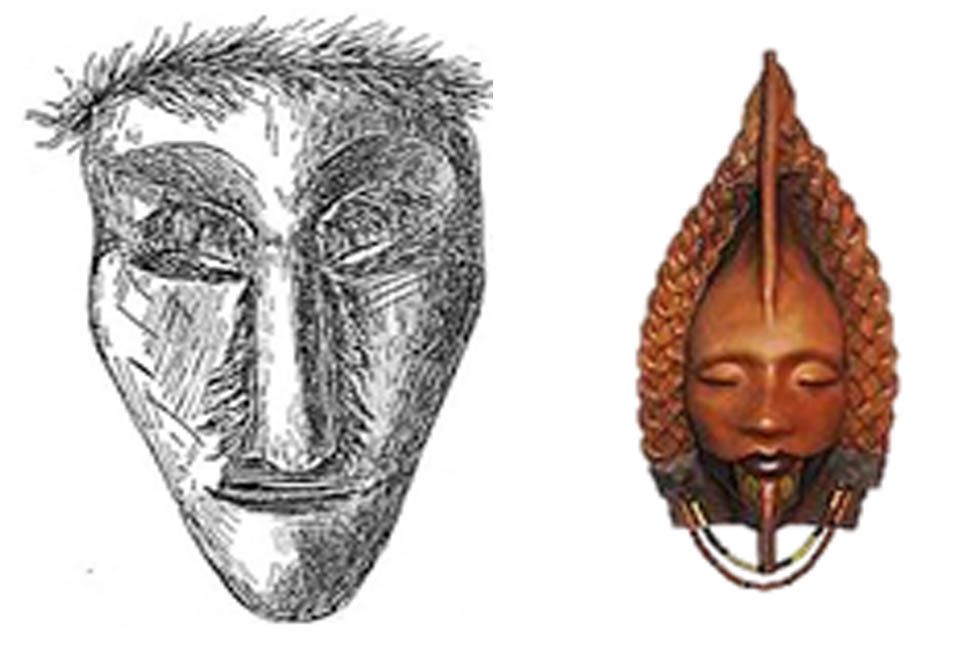
Pueblo artisans make masks for their religious rituals, called Hopi and Zuni Kachinas . These are usually made of leather, with appendages of fur, feathers, or leaves. Some cover the face, others the entire head, and are often abstract shapes. Navajo masks appear to be inspired by Pueblo prototypes.
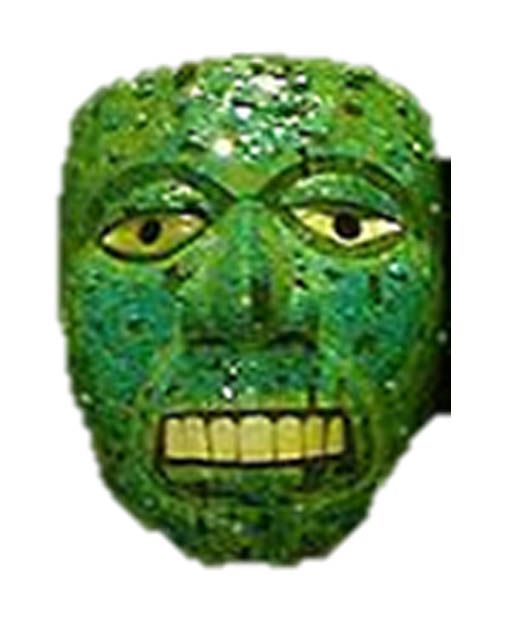
Because the Aztecs valued human skulls as war trophies, they made skull masks that were commonly seen. The masks were also used for entertainment, combining political and religious significance.
Post-colonial traditions merged with pre-Columbian traditions, thus creating various indigenous ceremonies, some called masquerades or All Souls' Day , which despite the Church's efforts to eradicate them, have perpetuated.
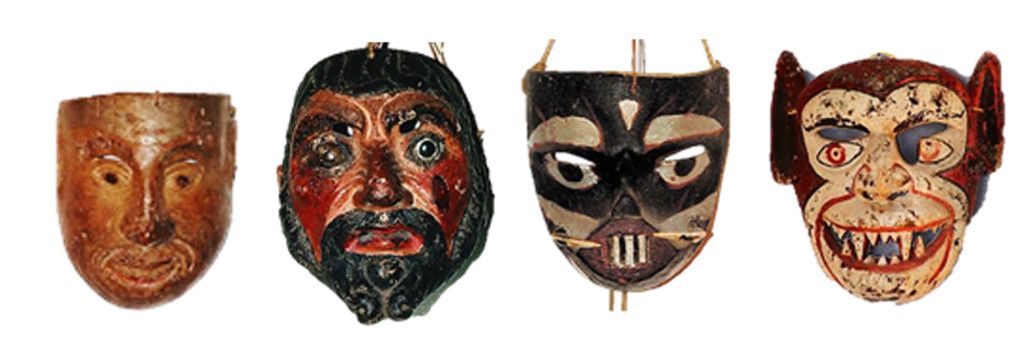
Mexico, in particular, retains a great deal of creativity in mask production, also encouraged by collectors.
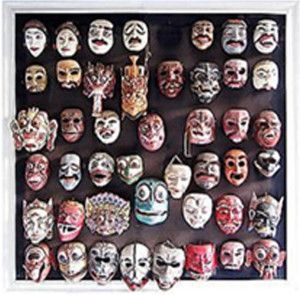
Indian masks represented various characters, usually deities, and were the central element of Indian drama in theatre, based on illustrations from the vast epic poems Mahabharata and Ramayana . Countries with strong Indian influences were: Cambodia, Burma, Indonesia (especially Java and Bali), Thailand and Vietnam, but these Indian forms, combined with local mythical representations, developed into their own characteristic styles.
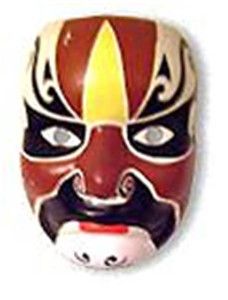
Dance masks – Shigong – (China ) were used in shamanic rituals to please the gods, while dance masks – nuo – protected them from evil spirits. Wedding masks were used in prayers that brought good luck and a long marriage, and were often associated with protecting the home. The masks were used in a basic “common” form at the opera with different color patterns.
The oldest Japanese masks were called gigaku. These have disappeared, and from them emerged masks with movable jaws, worn in a complex, dramatic dance ceremony called Bugaku .
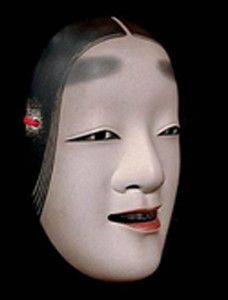
All Noh masks evolved from gigaku and bugaku , being operated entirely by men. The masks are worn throughout a long performance, and are also very lightweight.
Masks are representations of gods, men, women, fools, or devils. Each category has several subdivisions. Kyōgen, for example, are short farces with their own masks, with which tragic plays are performed. In the Kabuki theater of modern Japan, masks are replaced with painted faces.
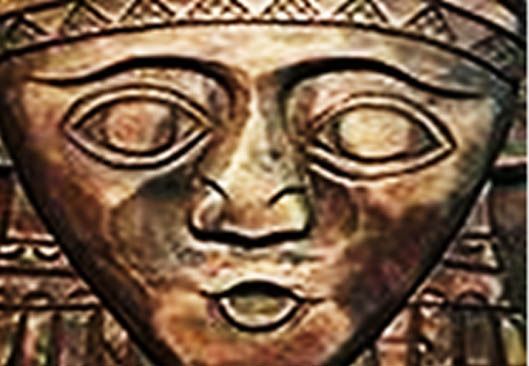
Theater in the Middle East initially had a ritualistic character, dramatizing man's relationship with nature, gods, and other beings. Popular theater contained various scenes with: mimes, masks, farces, juggling, and was often used in various religious rituals or rites of passage, such as: name days, circumcisions, or marriages.
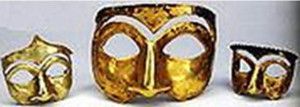
First half of the 1st millennium BC, National Museum of Iran
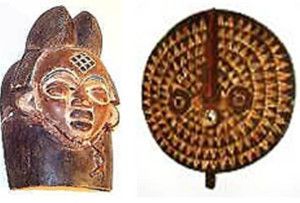
African cultures , including tribes, have perhaps the richest traditions in mask rituals. In Africa, tribes use masks for funeral ceremonies and harvest dances. They occupy an important place in the rite of passage for young people, becoming a source of pride in celebrations, even today. Masks are unique to each tribe, and in Africa their shape and accessories have special meanings in different cultures. Some of the most abundant types of masks in African cultures are those representing animals.
In Europe, various forms of masks representing monsters, bears, harlequins, horses and other fantasy characters appear in carnivals throughout Europe. It is generally accepted that the masks, in the syncretism of the manifestations, associated with noise and color, are meant to drive away the spirits of darkness, associated with winter, opening the way for the spirits of light and the coming of spring.
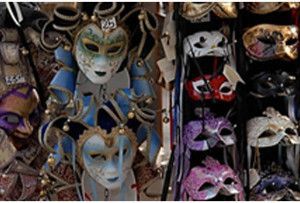
These grew in number and variety, becoming evident by the 15th century in places such as Rome, Venice, and Nice, where they were used for entertainment and to enliven the atmosphere of cities on festive days.
Masks revive myths and fulfill a social function, but they are also " ...true cosmogonies that regenerate time and space: they thus seek to withdraw man and the values he embodies from the degradation that marks everything in his historical time. " ( Chevalier, Jean , Dictionary of Symbols , Polirom Ed., Iaşi, 2009, p.566)
Tags
- masks in culture
- traditional masks
- spiritual art
- mask making
- cultural identity
- symbolism in art