
Bodypainting - The Living Canvas of Art
Discover the fascinating world of bodypainting - from ancient tribal traditions and ceremonial art to contemporary creative expression. Explore how the human body became a living, breathing canvas for artists around the world.
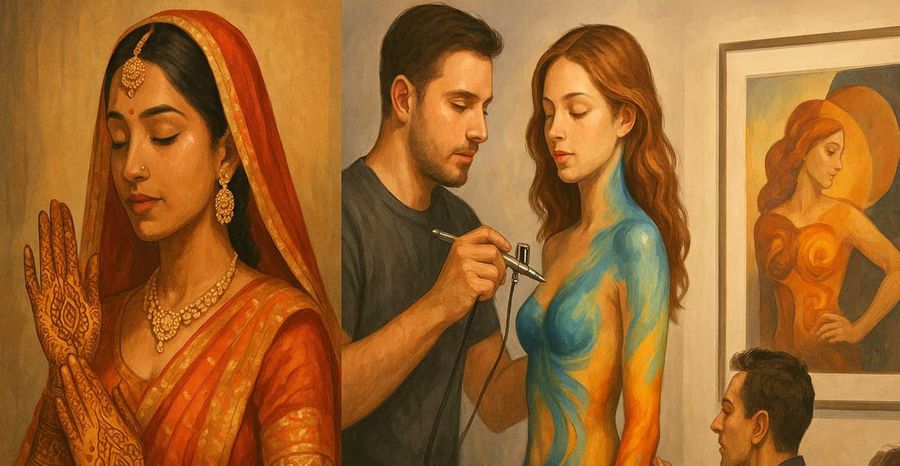
Bodypainting , or painting on the human body, is a form of art that, unlike tattoos and other forms of body art, is temporary and uses skin instead of canvas. The painting on human skin lasts only a few hours, or at most a few weeks. Bodypainting that is limited to the face is known as face-painting .
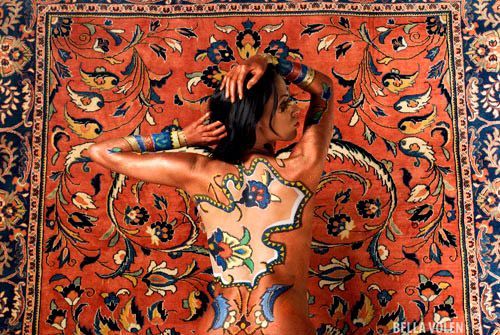
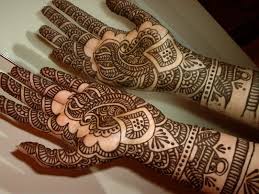
Bodypainting with clay and other natural pigments has existed in most ancient cultures in one form or another. Often this type of painting was worn during ceremonies. In some tribes in Australia, New Zealand, the Pacific Islands and parts of Africa it still survives in its primitive forms. A semi-permanent form of bodypainting , known as Mehndi , using henna dyes (also known as " henna tattooing "), was and is still practiced in India and the Middle East, especially on brides. Since the late 1990s, mehndi has also become popular among young women in the Western world.
Many indigenous peoples of Central and South America used to tattoo themselves with Jagua , using the essence of the Genipa americana plant . Indigenous peoples of South America still traditionally use extracts from the annatto plant , huito , or even wet charcoal to decorate their faces and bodies. The huito extract is semi-permanent and it generally takes weeks for the black dye to fade.
Later, actors and clowns around the world painted their faces and sometimes their entire bodies for centuries, continuing to do so today. From these forms of bodypainting and the paints used, the cosmetics we know today evolved.
In Western society in the 1960s, there was a kind of renaissance of body painting, with the liberalization of social mores regarding nudity. Even today, there are heated debates about the legitimacy of using the human body as an art form.
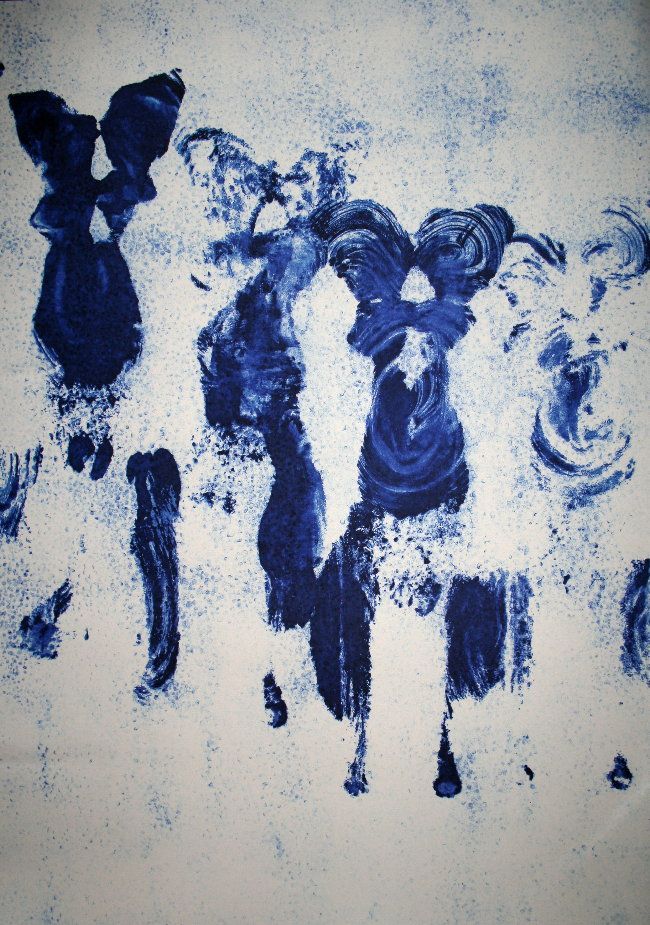
Bodypainting is not always a full-body painting, it can also be done on a smaller scale and even with clothing. Bodypainting even spawned a brief alternative art movement in the 1950s and 1960s, which involved covering a live model in paint and then having the model "print" their own body onto a canvas or other painting surface to transfer the paint. French artist Yves Klein is perhaps most famous for his series of paintings called " Anthropometries ". The effect produced by this technique creates an image of the model's body being transferred onto the painting surface.
By the early 1990s, bodypainting had become accepted as an art form in the United States, and more bodypainting artists were becoming known for this art form. Bodypainting artist Joanne Gair made a big splash in 1992 when she painted the body of famous actress Demi Moore, who appeared on the cover of Vanity Fair magazine in August.

Starting in late 2006, art galleries in Sacramento, California, began using bodypainting as a performance art to attract new gallery patrons. In 2006, Craig Tracy opened the first gallery dedicated exclusively to bodypainting in New Orleans, in the French Quarter, called Painted Alive .
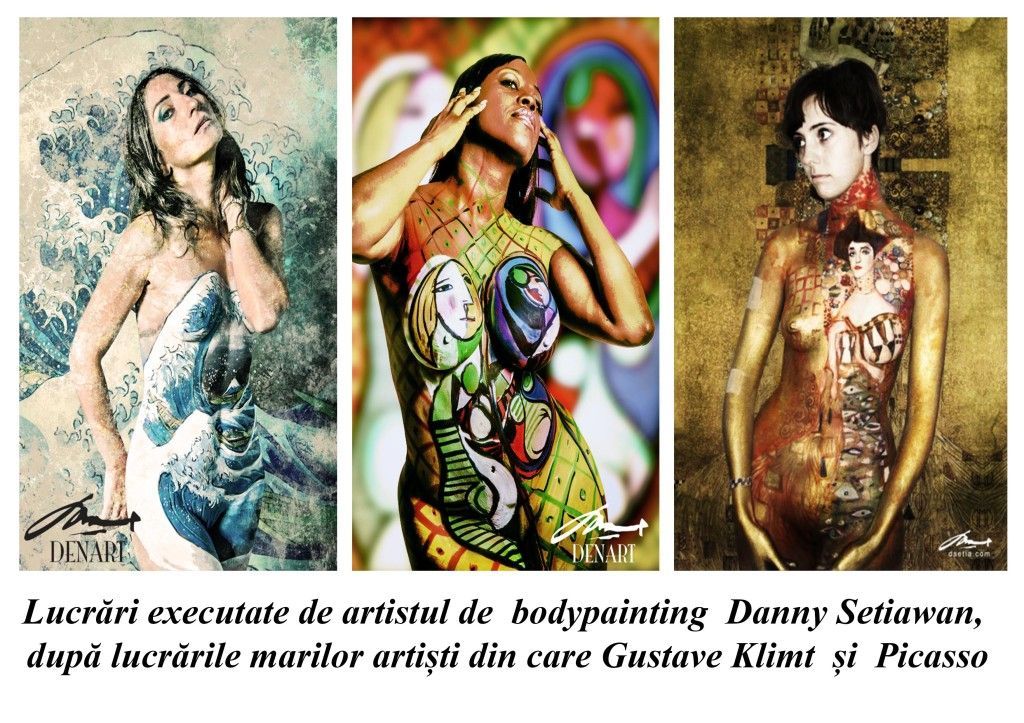
In 2009, bodypainting artist Danny Setiawan created reproductions of great masterpieces by famous artists such as Salvador Dalí, Vincent van Gogh, and Gustav Klimt on human bodies.
In this type of art, the face and body are covered with modern, water-based paints made according to strict standards, which means they are non-toxic, non-allergenic and can be easily washed off. These colors are either applied by hand, with a brush, with synthetic or natural sponges, and more recently with an airbrush.
Tags
- bodypainting
- temporary tattoos
- body art techniques
- human canvas
- art forms