
The Eternal Art of Painting with Stone and Light
Discover the fascinating world of mosaic art - a painting technique that endures through centuries, blending color, texture, and light with tiny cubes of marble, glass, or stone. Learn how ancient and modern artists create these lasting masterpieces.
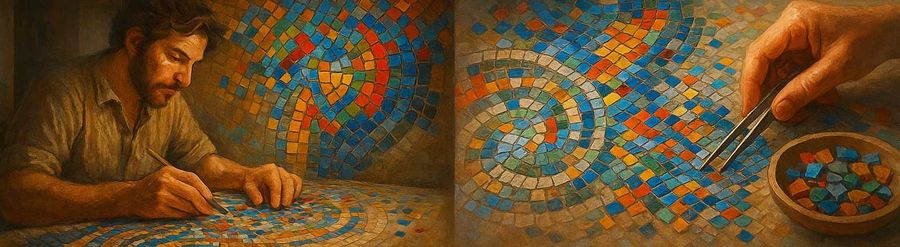
Mosaic is valued as the most durable of all paintings, which can be considered eternal. Being resistant to blows, wear, moisture, it can be washed, is not attacked by chemical agents, frost, and also has a protective role for the wall on which it is applied. From marble slabs in 2-3 colors, used as flooring by the Greeks, it has reached increasingly smaller cubes, made of porphyry, granite and colored marble. The cubes were placed to form geometric figures, birds, animals, then it was moved to decorating the walls. The Florentine painter Ghirlandajo from the 15th century said of it that it is a - painting for eternity - but that it has a drawback, namely that it is very expensive.
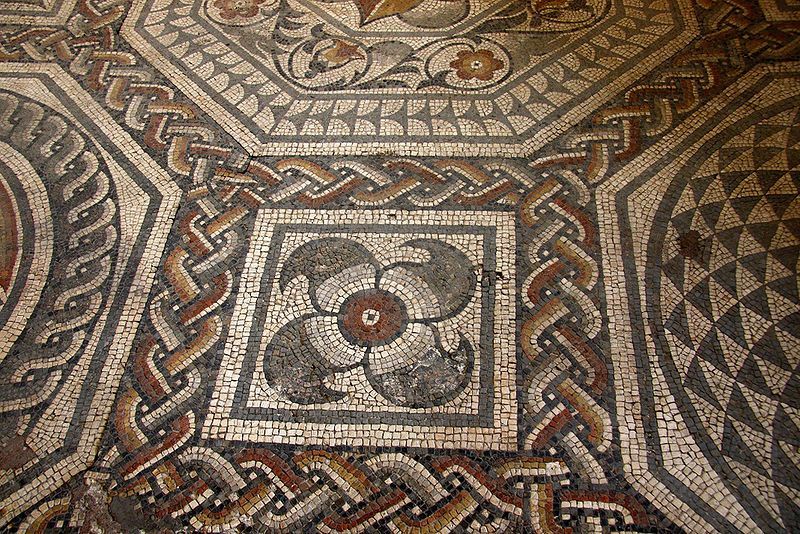
The materials used are difficult to obtain, its execution requires a lot of skill and time, and the artist must be well specialized. These are colored cubes according to the requirements of the work. In Antiquity they were made of glazed faience or naturally colored stones. After the Renaissance, colored bottles with different metal oxides were used. Their size varies from 5 mm for human figures, up to 1 cm. The small cubes have the quality of offering more delicate color effects, with finer tones and shades, the work being able to be viewed more closely than that with large cubes.
The material used today as a binder is cement, but in the past a plaster based on two layers of lime and sand 1 ½ cm thick was used, then a third one called the mosaic bed 5 mm thick made of lime paste and marble dust.
The drawing is executed in a simplified, impeccable manner, because in the end any correction is impossible. It is done in the size of the execution, on cardboard, with local colors, taking into account proportions according to height.
HOW TO MAKE A SIMPLE MOSAIC?
Techniques and Procedures
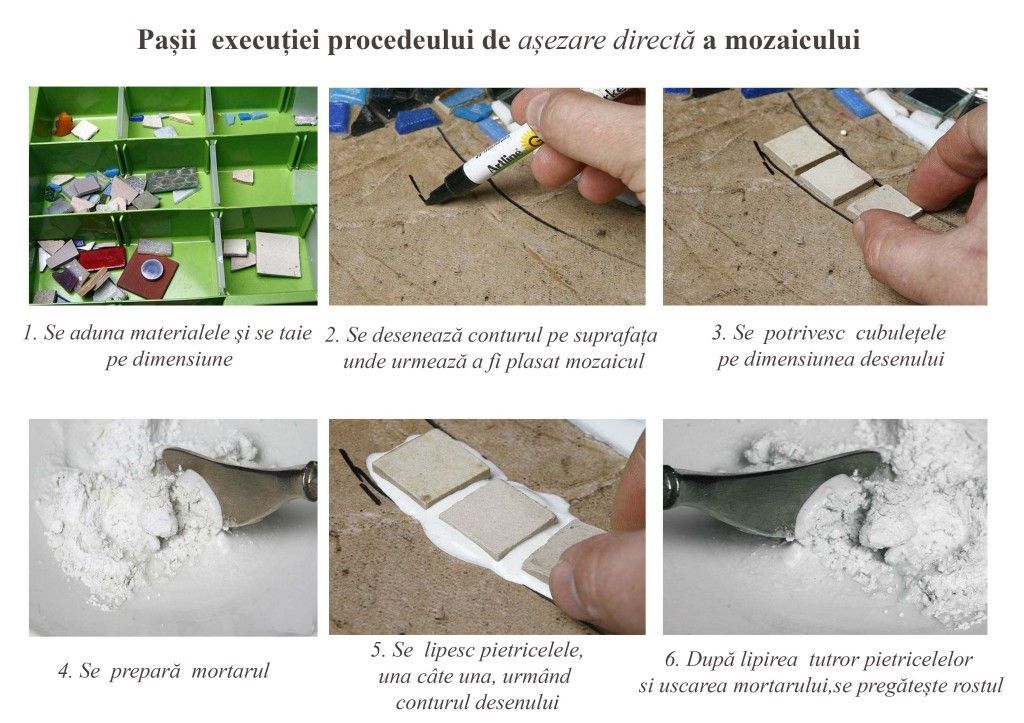
The first and oldest method is also called direct laying , which requires fixing the cubes directly to the wall. The mosaic bed is laid only as much as can be covered with cubes in 1-2 days, that is, about ¼ m2. Then the drawing is sketched on the wall with a paintbrush. Then the colored cubes are immersed in water, taken out, shaken a little, then with small pliers or tweezers the painter picks them up and plants them next to each other, each in its place, by lightly pressing them into the plaster. It starts with the entire outline, then continues with the light colors, filling the rest in the shape, to give rise to volume. Then after about 24 hours, the empty joints between the cubes are filled and colored in the neighboring shades, with a brush and colors.
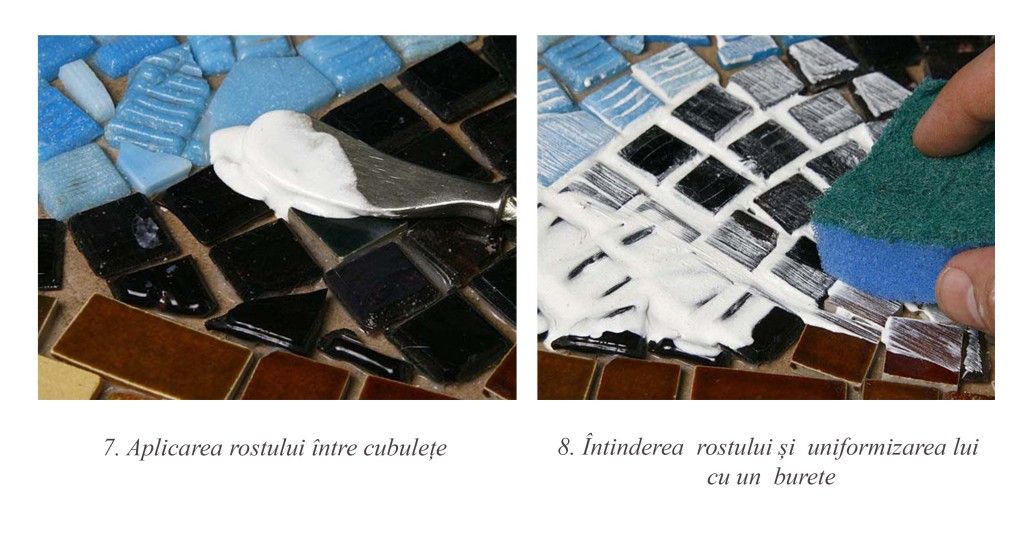
The second method , also called reverse laying , allows the mosaic to be worked with more precision than the original cardboard, but can also produce unpleasant surprises. This process is used only for mosaics on flat surfaces. The design is transferred onto thick, non-glossy, tear-resistant paper (the design must be executed on both sides of the paper), which is then placed face down on a wooden board with metal edges, smaller than the cubes. The paper is greased with bone glue, dextrin, etc. Then the reverse laying begins, that is, fixing the cubes face down, using tweezers, without going beyond the edges. After the glue under them has dried, the board is turned over, completely, and with the help of the glue paper that now fixes the cubes, it is applied to the soft bed of plaster, recently applied. After placing them, press firmly or tap with a hammer on the board. If any mistakes appear, they are quickly corrected with the board. After the plaster dries, the paper is removed, carefully wetting it with a sponge, then the joints are filled with a plaster paste of a neutral color, wiping off the excess with a damp cloth. Here too, the joints are colored after drying.
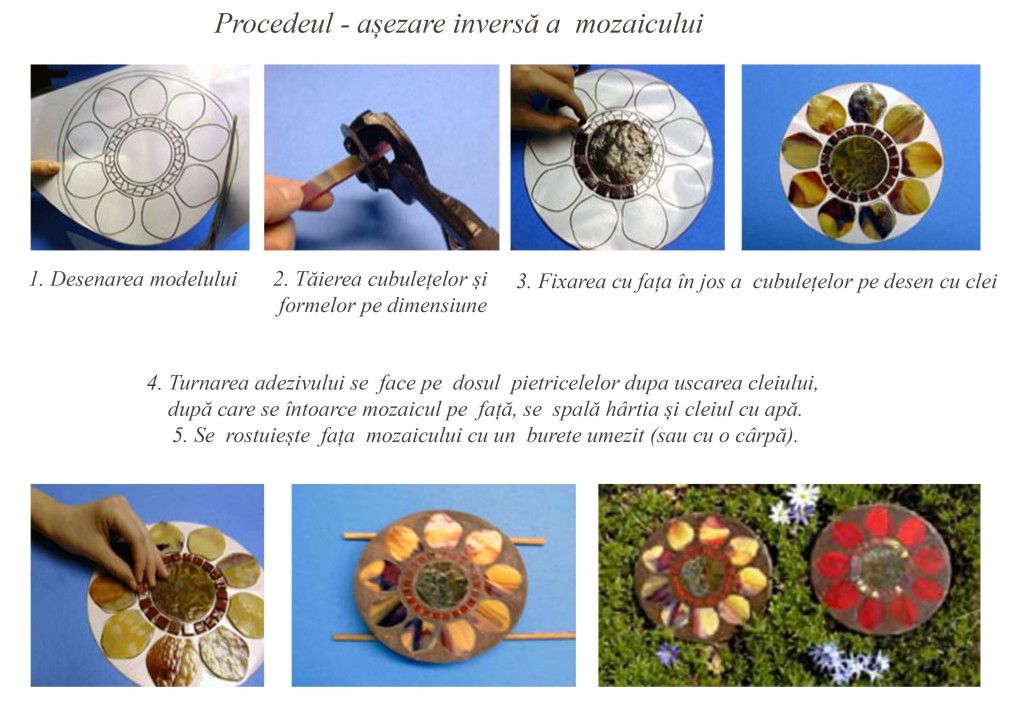
Mosaic works can also be executed in other techniques, for example on wooden boards, on marble or metal plates with raised edges. More recently, the cubes have been replaced with colored beads, or with pebbles, naturally colored, and their fixation is done with a synthetic resin paste.
Tags
- mosaic art
- art forms
- ancient art
- artistic techniques
- history of mosaic