
History of Book Illustration and Comics
Explore the evolution of book illustration from medieval illuminated manuscripts to the colorful world of modern comics. Discover how storytelling through images has evolved with printmaking, lithography, and digital art.
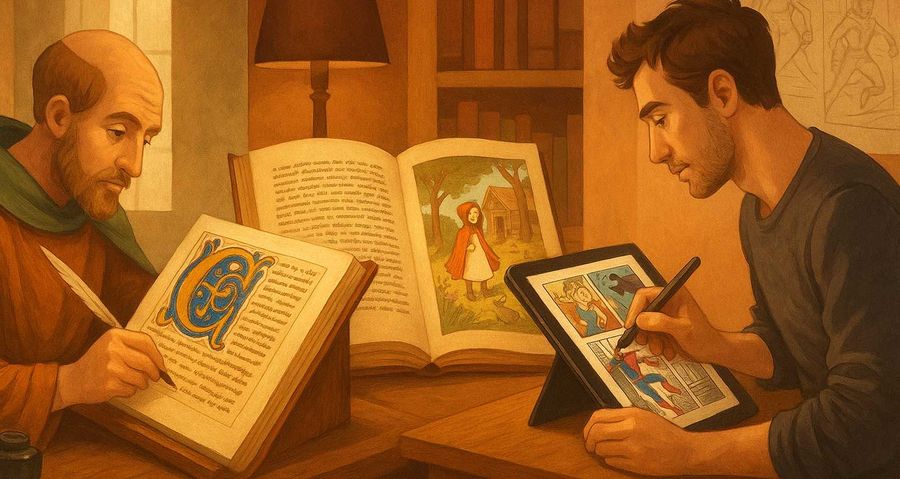
Book illustration is an art as old as books, being a graphic technique. At first, it was hand-painted on paper or parchment. The idea of visually translating a text dates back to ancient times, but it was given special attention only in the Middle Ages with the advent of the illuminated manuscript.
The illustration most often appears on the page next to the text, but it can also be placed in the middle or below the text. It is always in relation to the “ story ” written in words. The illustration is narrative and interprets the narrative through the eyes and imagination of the person who created it. To create these illustrations, special line drawing tools are used or, more recently, with the help of computer image processing programs.
HISTORICAL:
In Ancient Greece we have among the first illustrated texts such as those of Virgil and Homer 's Iliad .
In the Middle Ages, many of the themes were taken from Antiquity. The illustrations in this period are not necessarily separate from the text.
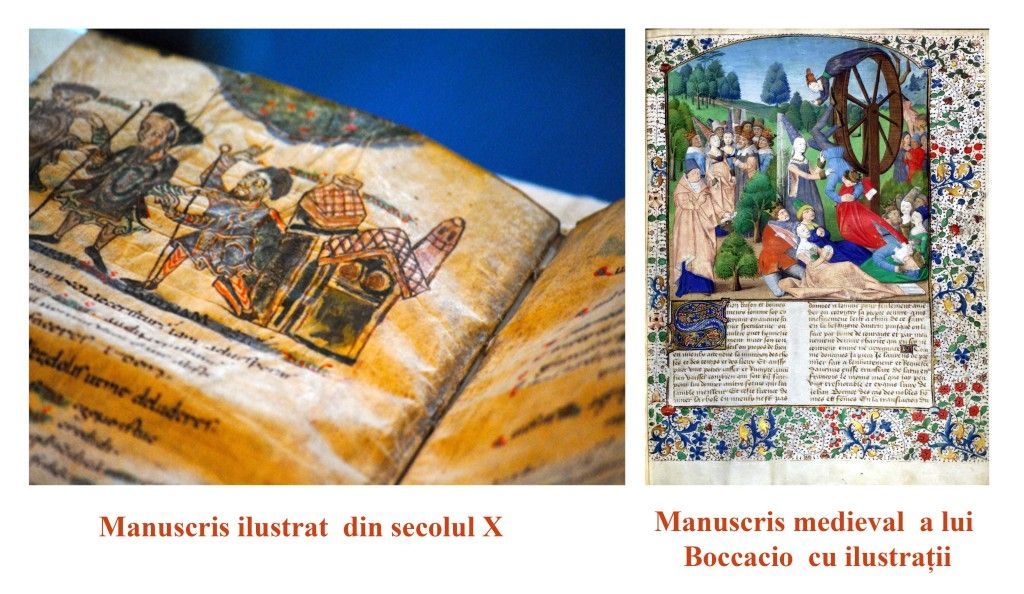
In the 15th century, the first series of books depicting religious scenes appeared. The techniques used to reproduce these illustrations also developed, woodcut ( from the Greek xylon – wood, represents the art of engraving wood and its result, represented by wood engraving ) improved, and during this period, small copper engraving was invented . The woodcut technique was used to make popular books, sold by colporteurs in Europe in the 17th and 18th centuries . Colporteur books looked like small bundles of ancient legends, folk tales, almanacs, and songs of gestures, which were crudely illustrated.
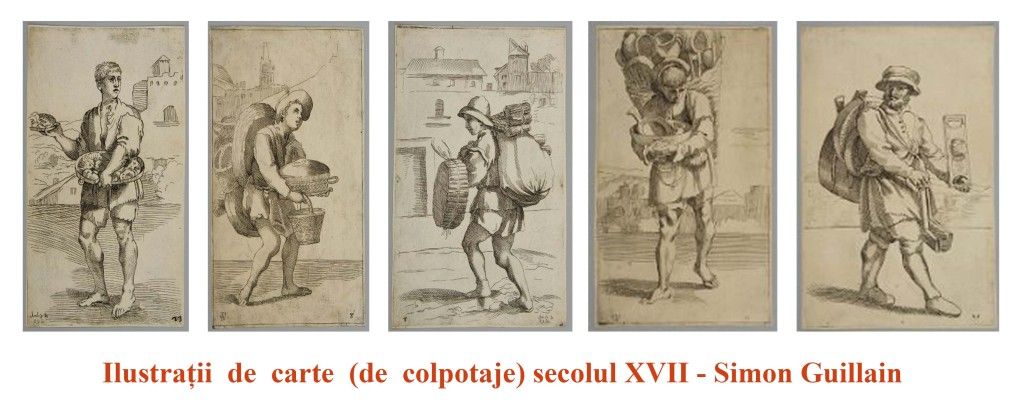
With the discovery of wood engraving with the fiber standing up, which was more resistant, it allowed the simultaneous printing of text and image, thus giving the page harmony between text and image, but also greater finesse and detail.
In the late 19th and early 20th centuries, lithography allowed works to be printed in color. Children's book illustration gained some autonomy during this period, especially in Great Britain.
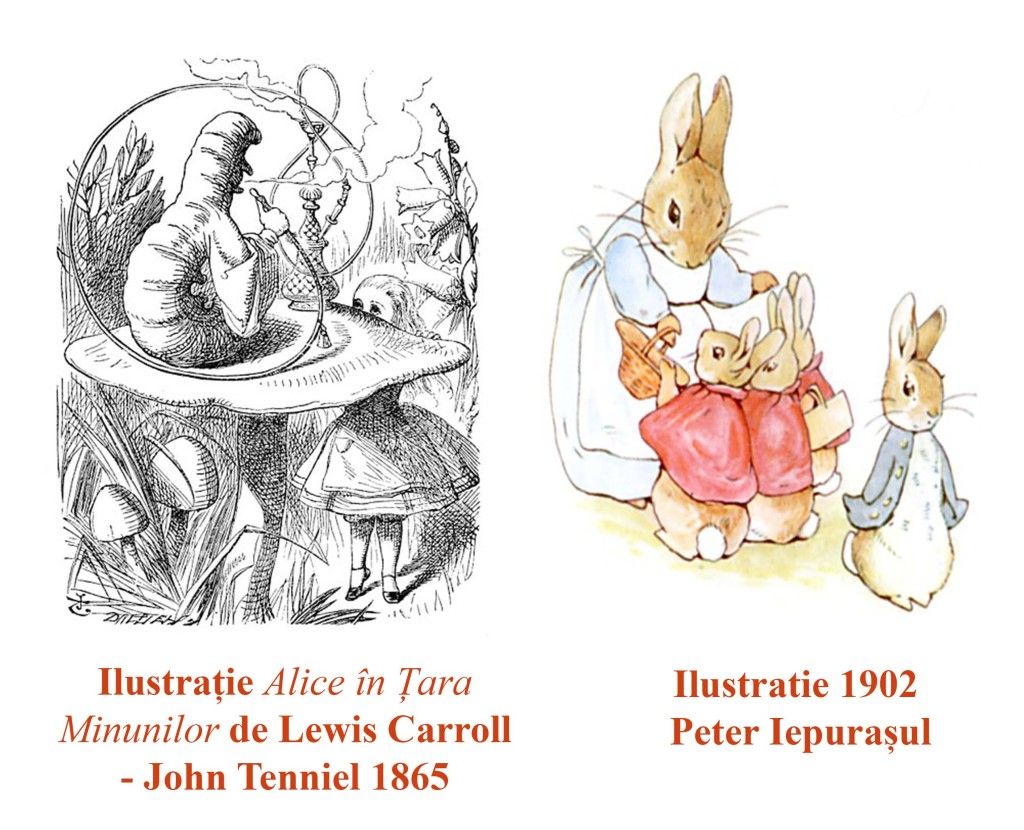
In France, artists become aware of the impact of the image and the influence it has on the child's spirit. During this period, the publisher Pierre-Jules Hetzel launches the first book collection for young people. The first comics also appear at this time. Cinema and television drive the development of image culture, and research into child psychology will determine authors and publishers to diversify the range of expression, towards aesthetics and realism, but also towards simplification. Towards the middle of the 20th century, there is a push towards expressiveness and aesthetics, encouraging creativity greatly in this field. Demands are formed regarding format, layout, graphic form.
Comic strip or BD
It was born simultaneously with the newspaper and book illustration, Rodolphe Topffer being the one who taught them in the early 1830s. The narrative is framed in special boxes for the text, for each action and for each character. Thus, when you read a comic strip you can see the entire action unfolding. The illustration is a synthesis of the text, a narrative that must be illustrated. Its presentation was done in various ways: on boards, small-format illustrations, albums, etc.
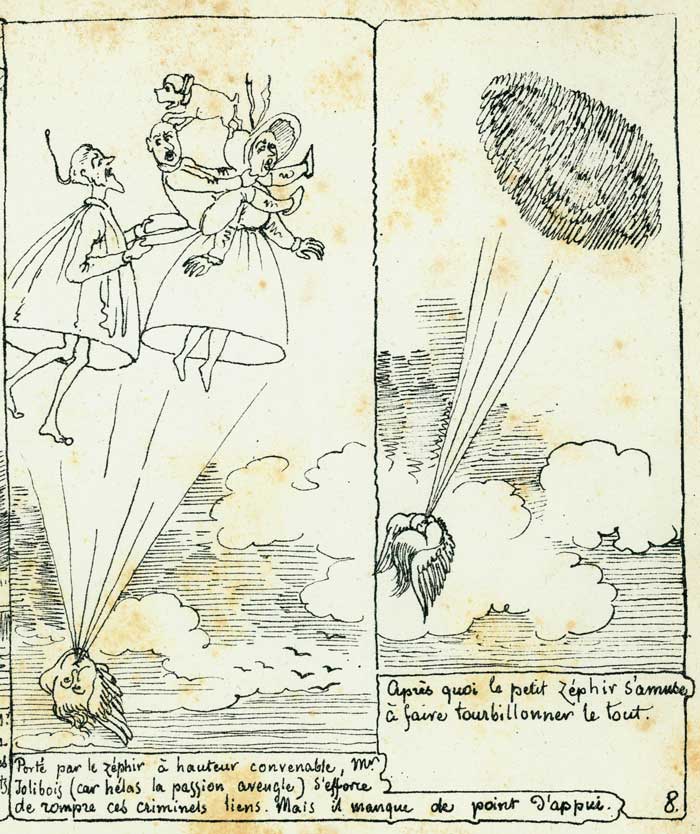
In the United States they were popularized at the end of the century, they appeared in American magazines under the name of strip or Comic-strip, and later, as the number of pages increased, the Comic book was born. From America they spread throughout the world under other names.
Making comics:
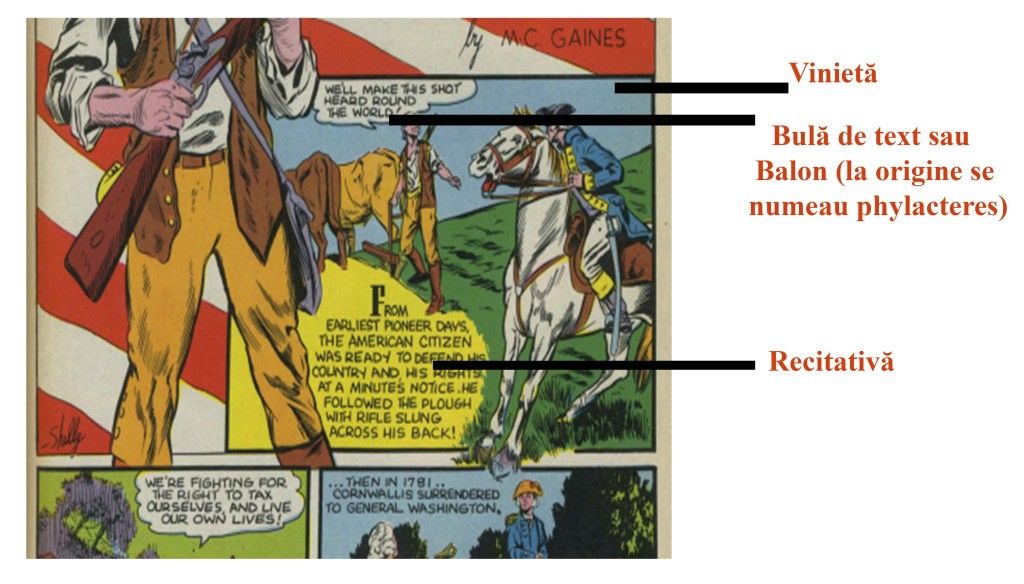
Onomatopoeias are also present in text bubbles , being words or symbols representing sounds, an action, a thought through phonetic, graphic or symbolic imitation. Comics are presented in the form of panels , which in turn are an overlap of strips . The author usually discreetly numbers the panels. An album is made up of panels that tell a narrative, they belong to a series.
The stages of making a simple comic :
Step 1. The idea . Generally, comic book artists have a sketchbook where they draw their first ideas, impressions, characters, objects.
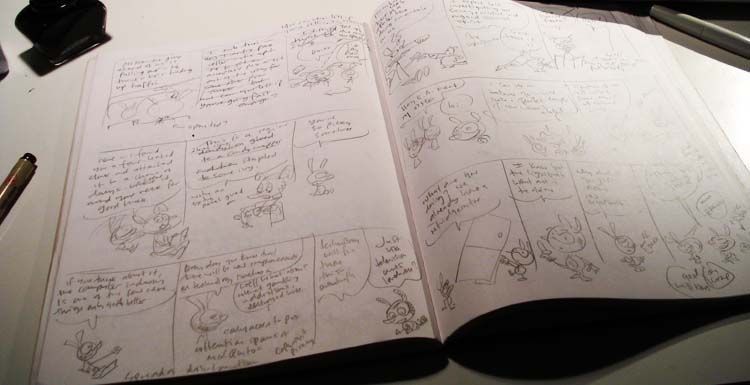
Step 2. Primary sketches and composition of the board. These sketches are made in a softer pencil (approximately 2B, but it depends on each one), the outlines of each box (vignette) are traced to compose a board, the characters are drawn, the text bubbles are executed.
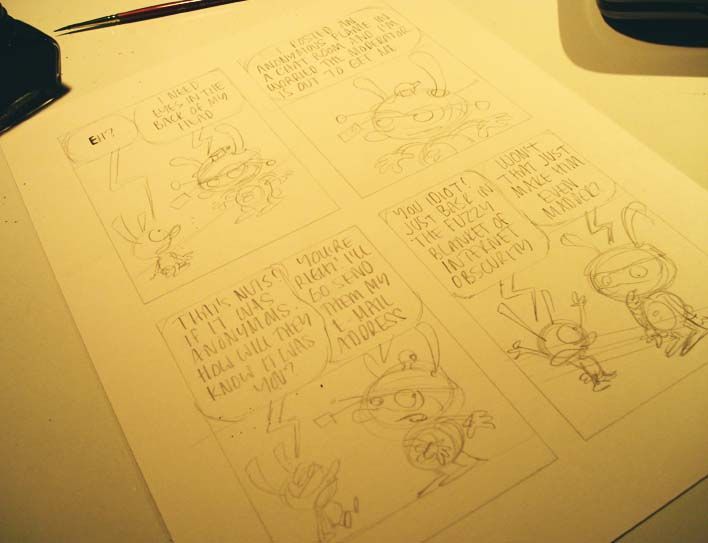
Step 3. The ink drawing . Which involves two variants, one is the intervention directly over the pencil, and the second would be with the tracing paper placed over the drawing on which the outline will be drawn in ink.
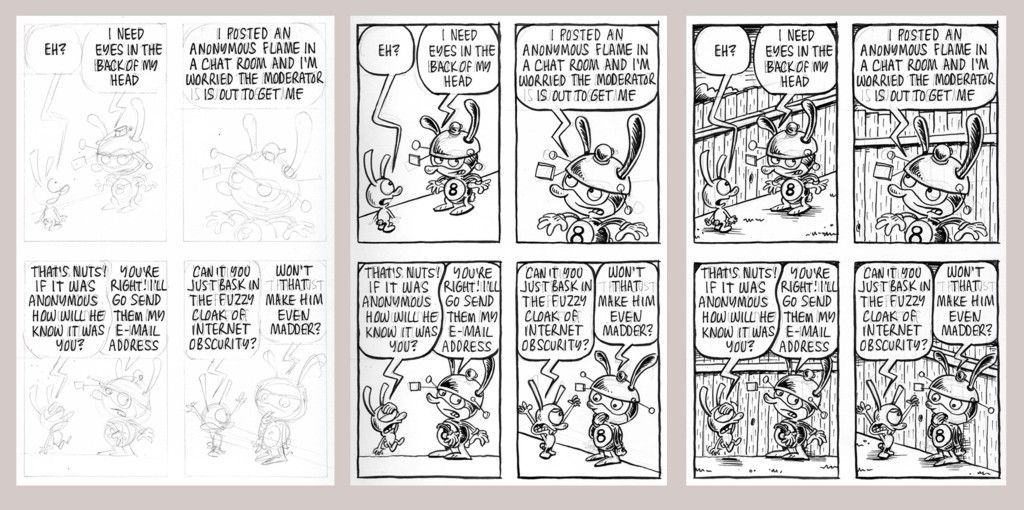
Step 4. Erasing the pencil .
Step 5. Digital processing and coloring . Since the computer does a much faster job, the drawings that have reached the final stage (i.e. being traced with ink), are scanned and processed with the help of computer programs. In the past, coloring was done with a brush and airbrush. The colorist had to define the lights and shadows, also respecting the continuity of the colors throughout the sheets.
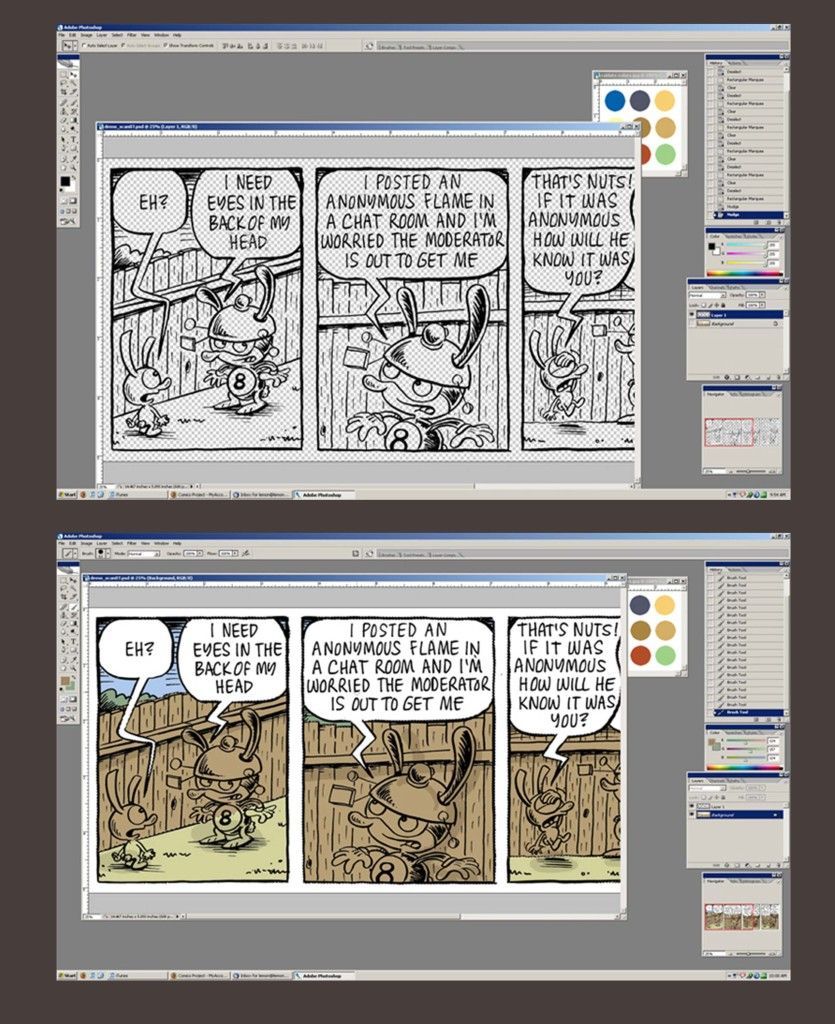
The comic strip – the final stage.

Tags
- book illustration
- comic art
- art history
- drawing and inking
- visual narrative