
The Art and History of Paper - From Ancient China to Modern Creativity
From ancient Chinese inventors to European papermakers, the story of paper is one of human ingenuity and artistic evolution. Discover how this essential medium transformed from a writing surface to a cornerstone of drawing, painting, and design.
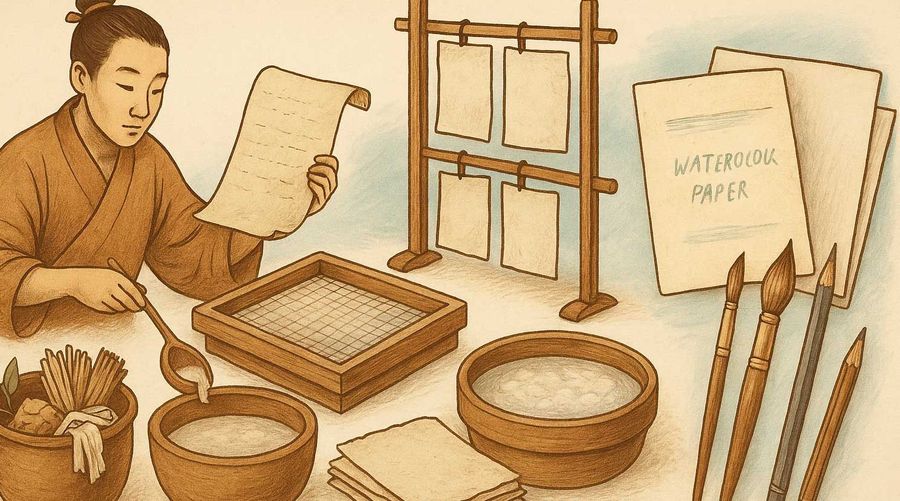
In 105, the Chinese Thai-Lung (48-118) presented a report to the emperor on the process of making paper, proposing that the new material be produced from tree bark, hemp scraps, rags, and old fishing nets. He is the father of the “white art” that papermakers honored by burning paper money. Paper became so popular and cheap in China that, according to an Arab traveler from the 10th century, everyone learned to write and draw on paper.
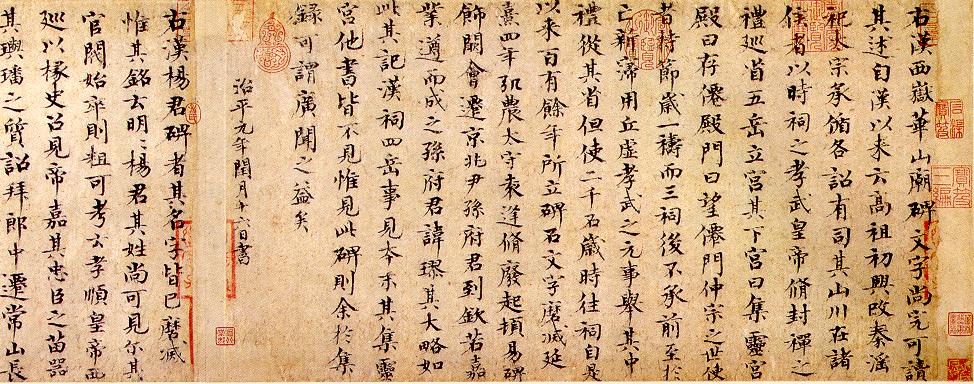
For centuries, the Chinese kept the secret of papermaking, inducing the idea that it was produced from plants that only grow in China. However, on the trade routes, towards Korea and the Silk Road, where Samarkand was located, paper would start for Europe because the Arabs were already old users of Chinese stationery. At this time, Baghdad was a capital of science that consumed large quantities of paper. Spread throughout the Arab world, the white art penetrated Spain in the 10th century through the Caliphate of Cordoba.
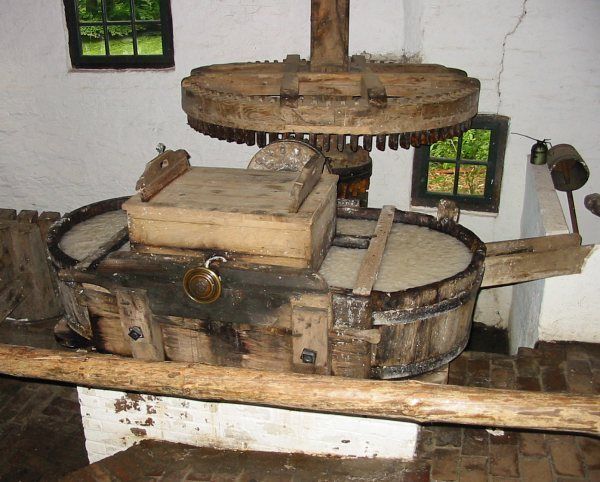
A sieve or sieve was used to make paper sheets. The cloths and strings were mixed with lime milk, cut, washed and ground in a mill until a fine and soft paste was obtained that became like silk. The Arabs used hydraulically operated paper mills. In the Moorish centers of Xativa and Girona, good quality paper was produced, but until King James I, the church was against the use of this pagan invention. In the 11th and 12th centuries, Italy was distinguished by the workshops of Fabriano, which ground the cloth with stamps, and instead of starch they used gelatin sizing. To protect their products, they invented watermarking.
Production spread to Switzerland and Germany, where hollandaise was introduced in the 17th century. From this moment on, we can speak of paper manufactures that also spread to the Netherlands, England and France. As the demand was already very high, in 1798 Nicholas Louis Robert invented the papermaking machine, but it was first produced and perfected in England by the Foudrinier brothers. Later, wood began to be used as raw material, which solved the problem of procuring raw material at a low cost, but it would not equal that of paper produced manually from rags for a long time.
On the territory of Romania, the oldest document written on paper kept in the archive of the Chapter of Alba Iulia dates from 1328-1330 and comes from the papal chancellery in Avignon. At first, documents that did not require a durable form were written on paper. In the 15th century, paper was used for registers, protocols and account books, being imported from Italy.
In 1431, the customs privilege granted to the people of Brașov by Dan II, the voivode of Wallachia, was written on paper.
In the field of the arts, paper is a particularly important support. Thus, it has a wide range of applications, including painting, drawing, graphics, engraving, and calligraphy. Paper is available in a wide range of sizes, thicknesses, and finishes, as well as in different degrees of quality, permanence, and durability.
A special type of paper can often be used for purposes other than the one for which it was created. Printing paper, for example, can be used for acrylics, and many graphic papers are ideal for drawing. It should be borne in mind, however, that some papers have pronounced aging characteristics and should not be used for works of art.
Watercolor paper, as we know it today, was developed in the second half of the 18th century and is, therefore, a relatively modern achievement. James Whatman paved the way for the development of watercolor paper when, on a commission in the late 1750s, he replaced the traditional wire screen used in papermaking with one so fine that it was called “wire cloth.” This allowed the cellulose fibers to form without any impression of texture on the surface of the newly formed paper. This new style of paper was called wove paper and was created primarily for printing. Whatman found that he could create different prints and textures on this paper. Whatman has created its paper to be available in three versions: “hot-pressed” or satin (this type of paper has a smooth surface and is used more for ink and soft materials for drawing, not being very preferred by traditional watercolorists), “cold-pressed” or fine (this type of paper has a slight texture and is most often used by both beginners and advanced watercolorists) and hard or thick (this has a pronounced texture and is recommended for professionals). Watercolor paper is commercially available in the form of rolls, sheets and blocks of various sizes.
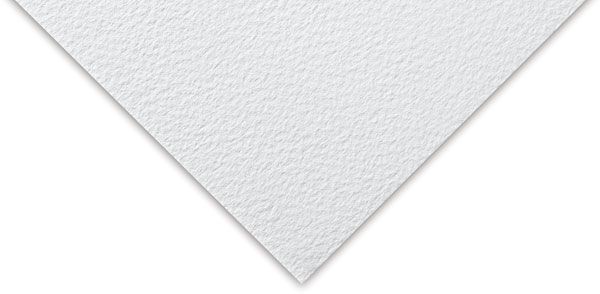
Drawing paper. Any paper that has sufficient texture can serve as a drawing surface. However, to be considered good, a drawing paper must be durable enough to withstand repeated erasures without seriously damaging the surface. It should also absorb ink neither too much nor too little. Each artist must do their own testing and comparisons between the available varieties of drawing paper. Even a simple pencil line will appear quite differently on different brands of paper. The categories of drawing paper are: Bristol (it is the hardest and most resistant paper and comes in two versions, smooth and textured), charcoal and pastel (this paper is not as resistant as the previous one, but it still has two types of textures, some more pronounced, others less so, but pastel paper comes in a very wide range of colors, because for a pastelist the choice of surface color is very important), drawing and sketching (drawing paper varies greatly from those for printing to the handmade Fabriano paper from Rome, which is said to have been used by; today, huge rolls of paper are in great demand), graphic paper.
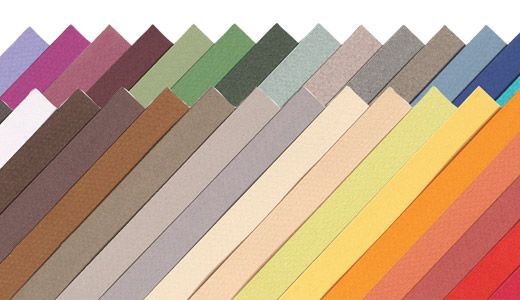
Other types of papers: – Special papers: separation papers – are those papers that are used to separate artwork, with neutral PH and non-abrasive.
Transfer paper: this is more oily and helps transfer a drawing to another surface, even on metal;
Stencil paper: it is oily or waxed to resist and does not swell when used repeatedly in the case of water-based paints.
Calligraphy paper: it is that paper that does not flow or swell when using ink or brush.
Tags
- paper history
- handmade paper
- drawing paper
- paper in art